

Do you feel you’re working like a firefighter?
Do you have the perception, you’re solving the same problems over and over?
Do you worry about ever changing requests from your business partners?
Then you are not alone – not even alone in the pharma world.
In today’s episode, we will talk about the data ops manifesto which addresses such problems. There are actually a couple of such manifestos out there such as the agile manifesto or the dev ops manifesto. These sound similar to Demings 14 principles outlined in his “out of the crisis” publication.
The data ops manifesto can be found here and lists these 18 points – some of which are discussed in more detail in this episode:
Data Ops Principles:
- Continually satisfy your customer
- Value working analytics
- Embrace change
- It’s a team sport
- Daily interactions
- Self-organize
- Reduce heroism
- Reflect
- Analytics is code
- Orchestrate
- Make it reproducible
- Disposable environments
- Simplicity
- Analytics is manufacturing
- Quality is paramount
- Monitor quality and performance
- Reuse
- Improve cycle times
Listen to this episode now and learn from it!
Never miss an episode!
Join thousends of your peers and subscribe to get our latest updates by email!
Get the


Learn on demand
Click on the button to see our Teachble Inc. cources.
Featured courses
Click on the button to see our Teachble Inc. cources.
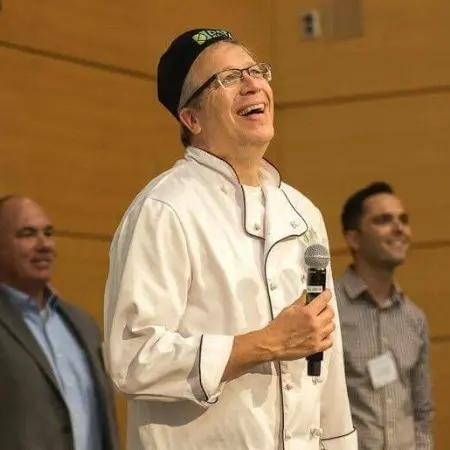
Christopher Bergh
Head Chef, CEO, and Founder at datakitchen
Regional Vice President – Model N, COO – LeapFrogRx, CTO and VP Product Management, MarketSoft; various engineering leadership roles at Microsoft, Firefly Network, MIT Lincoln Laboratory, and NASA Ames; US Peace Corps, Botswana; Columbia University, University of Wisconsin
Reference:
Join The Effective Statistician LinkedIn group
This group was set up to help each other to become more effective statisticians. We’ll run challenges in this group, e.g. around writing abstracts for conferences or other projects. I’ll also post into this group further content.
I want to help the community of statisticians, data scientists, programmers and other quantitative scientists to be more influential, innovative, and effective. I believe that as a community we can help our research, our regulatory and payer systems, and ultimately physicians and patients take better decisions based on better evidence.
I work to achieve a future in which everyone can access the right evidence in the right format at the right time to make sound decisions.
When my kids are sick, I want to have good evidence to discuss with the physician about the different therapy choices.
When my mother is sick, I want her to understand the evidence and being able to understand it.
When I get sick, I want to find evidence that I can trust and that helps me to have meaningful discussions with my healthcare professionals.
I want to live in a world, where the media reports correctly about medical evidence and in which society distinguishes between fake evidence and real evidence.
Let’s work together to achieve this.

