
“A core outcome set (COS) is an agreed standardised set of outcomes that should be measured and reported, as a minimum, in all clinical trials in specific areas of health or health care.”
This clarifies directly what the COMET initiative is about. But it also leaves open a lot of questions such as:
- Why are COS important?
- What are the goals of COMET?
- How narrow or how wide should COS be defined?
- What does the process look like to get to COS?
Listen to this episode of our podcast and learn from Paula Williamson and Liz Gargon about this important initiative.
Never miss an episode!
Join thousends of your peers and subscribe to get our latest updates by email!
Get the


Learn on demand
Click on the button to see our Teachble Inc. cources.
Featured courses
Click on the button to see our Teachble Inc. cources.
Professor Paula Williamson
Chair
Paula Williamson is Professor of Biostatistics, and was appointed as APVC for Strategy and Policy in the Faculty of Health and Life Sciences in 2018. She is Lead for the MRC/NIHR Trials Methodology Research Partnership (TMRP). She was Head of the Department of Biostatistics, 2002-2018, and Director of the Clinical Trials Research Centre, 2005-2018. Paula chairs the University of Liverpool’s Health and Biomedical Informatics Group. Paula co-founded and has led the COMET (Core Outcome Measures in Effectiveness Trials) Initiative since 2010. She was appointed as an NIHR Senior Investigator in 2014, gave the Bradford Hill Lecture in 2017, and was elected to the Academy of Medical Sciences in 2018.
Williamson, Paula P.R.Williamson@liverpool.ac.uk
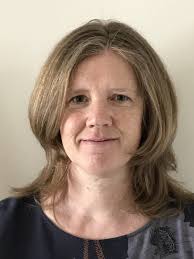
Dr. Elizabeth Gargon
COMET Project Coordinator
Elizabeth Gargon obtained a PhD in the Institute of Translational Medicine (Biostatistics) at the University of Liverpool. Elizabeth is the Project Coordinator for the COMET (Core Outcome Measures in Effectiveness Trials) Initiative. Liz conducts an annual systematic review of core outcome sets (COS) and maintains a database of COS (http://www.comet-initiative.org/studies/search). Liz’s recent projects have involved working with external colleagues to understand, develop and test complex automated methods to help with the screening process involved in a systematic review of this nature. Liz has also recently explored the impact of design characteristics on response rates in Delphi surveys within COS development, as well as carrying out a retrospective assessment of COS minimum standards (COS-STAD) for cancer COS to provide a baseline of caner COS standards. Liz’s current projects include the redevelopment of the COMET website and database, the recent update of the systematic review of COS (including an assessment of minimum standards in COS published in 2018) as well as developing a protocol to assess the uptake of a COS.
Gargon, Liz E.Gargon@liverpool.ac.uk
Join The Effective Statistician LinkedIn group
This group was set up to help each other to become more effective statisticians. We’ll run challenges in this group, e.g. around writing abstracts for conferences or other projects. I’ll also post into this group further content.
I want to help the community of statisticians, data scientists, programmers and other quantitative scientists to be more influential, innovative, and effective. I believe that as a community we can help our research, our regulatory and payer systems, and ultimately physicians and patients take better decisions based on better evidence.
I work to achieve a future in which everyone can access the right evidence in the right format at the right time to make sound decisions.
When my kids are sick, I want to have good evidence to discuss with the physician about the different therapy choices.
When my mother is sick, I want her to understand the evidence and being able to understand it.
When I get sick, I want to find evidence that I can trust and that helps me to have meaningful discussions with my healthcare professionals.
I want to live in a world, where the media reports correctly about medical evidence and in which society distinguishes between fake evidence and real evidence.
Let’s work together to achieve this.

