
Introducing
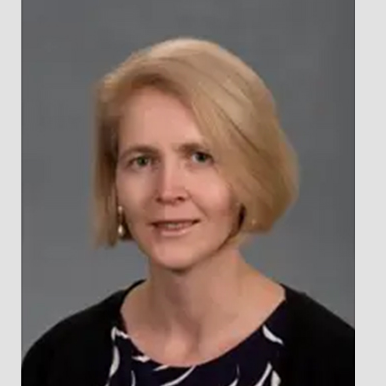
Regional Head in Global Biostatistical Science at Amgen
She is a Regional Head in Global Biostatistical Science at Amgen and she leads a Health Technology Assessment (HTA) Biostatistics group. Chrissie is also leading the development of Amgen policies and processes for sharing clinical trial data with external researchers. Chrissie has worked in the Pharmaceutical Industry for over 25 years and has experience in developing and commercializing new medicines from a variety of therapeutic areas across all phases of clinical development.
She is currently the Vice-President of the European Federation of Statisticians in the Pharmaceutical Industry (EFSPI) and the EFSPI Communications Officer; a member of the Statisticians in the Pharmaceutical Industry (PSI)/EFSPI Regulatory Committee; chair of the PSI/EFSPI HTA Special Interest Group (SIG); member of the Integrated Data Analysis (IDA) SIG and member of the EFSPI data sharing working group.
She is a member of the Clinical Development Expert Group for the European Federation of Pharmaceutical Industries and Associations (EFPIA), and she is one of 2 EFPIA representatives on the ICH E9 Revision 1 working group that is developing an addendum to E9 on estimands and sensitivity analyses. She is the Industry co-chair of the Innovative Medicines Initiative (IMI) ‘GetReal’ initiative Work Package 4 which is developing mathematical models and analytic tools for synthesizing clinical evidence and predicting the effectiveness of treatments based on data available from clinical trials and observational research databases/studies.
She is a Chartered Statistician and Chartered Scientist of the Royal Statistical Society (RSS). She has an MSc in Applied Statistics and a BSc (Hons) in Statistics with Management Science Techniques.
Never miss an episode!
Join thousends of your peers and subscribe to get our latest updates by email!
Get the
The past, present, and future of estimands!
with Chrissie Fletcher
If you ask someone within the pharma world of statisticians what is the hottest topic, you most likely will just get: Estimands!
Many scientific events, conference sessions, publications, and presentations are organized around this topic. Thus, I’m super happy, that we have Mouna and Chrissie on the podcast as they have presented this topic on various occasions.
In this episode, you will learn about
- the importance of the concept itself and its implications
- the terminology of the estimand framework
- and how it relates to missing data terminology
The episode covers the following questions and gives some examples of the different parts of the framework:
- What is the history of the estimands and how is it related to missing data?
- What is ICH E9 and why does it need an update now?
- What are the different parts of an estimand and how do they relate to each other?
- Is the estimand framework only applicable to clinical trials in the regulatory setting or is this something to be considered beyond the regulatory approval of new medications?
We also cover the PSI conference 2019, which surely will include sessions about estimands as well as the upcoming 1-day event organized by PSI: New Emerging Topics around Estimands and ICH Addendum. Click here to find out more about this event and the registration page.
The ICH E9 (R1) addendum on estimands and sensitivity 5 analysis in clinical trials to the guideline on statistical 6 principles for clinical trials can be found here.
A nice interview with Mouna around estimands as well as a great list of resources was published by Cytel here.
Join The Effective Statistician LinkedIn group
This group was set up to help each other to become more effective statisticians. We’ll run challenges in this group, e.g. around writing abstracts for conferences or other projects. I’ll also post into this group further content.
I want to help the community of statisticians, data scientists, programmers and other quantitative scientists to be more influential, innovative, and effective. I believe that as a community we can help our research, our regulatory and payer systems, and ultimately physicians and patients take better decisions based on better evidence.
I work to achieve a future in which everyone can access the right evidence in the right format at the right time to make sound decisions.
When my kids are sick, I want to have good evidence to discuss with the physician about the different therapy choices.
When my mother is sick, I want her to understand the evidence and being able to understand it.
When I get sick, I want to find evidence that I can trust and that helps me to have meaningful discussions with my healthcare professionals.
I want to live in a world, where the media reports correctly about medical evidence and in which society distinguishes between fake evidence and real evidence.
Let’s work together to achieve this.

