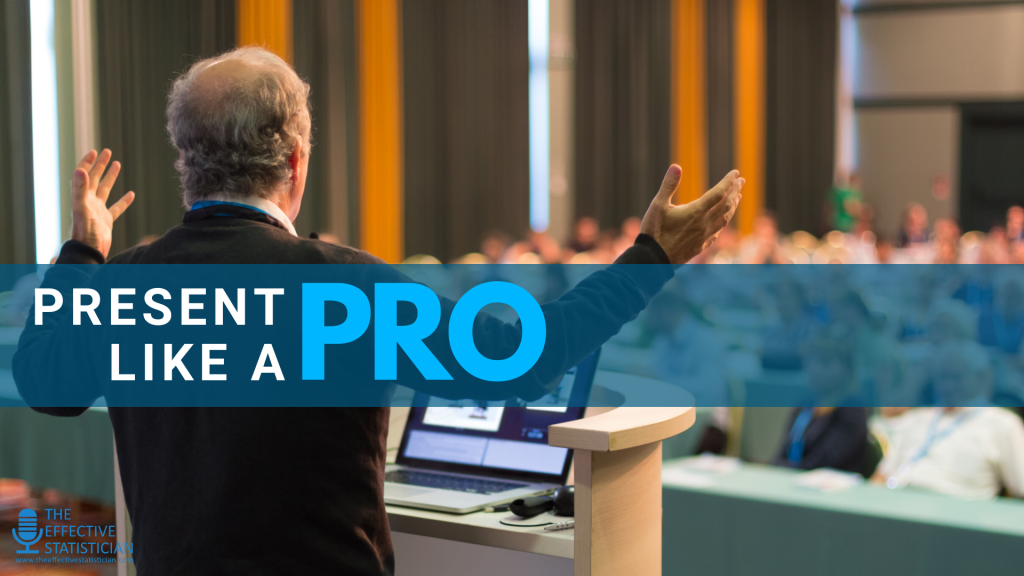

Have you been sitting through boring presentations?
Have you felt that the presenter lost the audience in seconds?
Have you found yourself after a presentation thinking – so what?
When you are presenting, you don’t want the audience to feel this way. But how can you deliver a knock-out presentation and wow the audience?
In today’s episode, Benjamin and I discuss 14 presentation tips that really work. We speak about:
- Be clear on your goals
- Have a strong start
- Start with a story, conclusions, then introduce yourself
- Enter the room or stage with confidence
- Speak to Ethos, Pathos and Logos
- Establish a powerful position
- Make eye contact
- Smile
- Never lean back when sitting – better stand up
- Dress appropriately
- Avoid anything distracting
- Appear confidently
- Position your camera well
- Use pauses intentionally
11. Variation of the voice
- Loud and soft
- Pitch
- Speed
12. Use wide gestures to increase your word choices
13. Using visuals effectively
- They support the presenter, not vice versa
- No complete sentence s
- Few words
- Pictures
- Figures
- Rarely tables
- Use bullet points sparingly
- Less is more
14. Have a powerful end.
- Story and conclusions and call to action
Listen to this episode and present like a pro!
Share this with your friend and colleagues!
Never miss an episode!
Join thousends of your peers and subscribe to get our latest updates by email!
Get the


Learn on demand
Click on the button to see our Teachble Inc. cources.
Featured courses
Click on the button to see our Teachble Inc. cources.
Join The Effective Statistician LinkedIn group
This group was set up to help each other to become more effective statisticians. We’ll run challenges in this group, e.g. around writing abstracts for conferences or other projects. I’ll also post into this group further content.
I want to help the community of statisticians, data scientists, programmers and other quantitative scientists to be more influential, innovative, and effective. I believe that as a community we can help our research, our regulatory and payer systems, and ultimately physicians and patients take better decisions based on better evidence.
I work to achieve a future in which everyone can access the right evidence in the right format at the right time to make sound decisions.
When my kids are sick, I want to have good evidence to discuss with the physician about the different therapy choices.
When my mother is sick, I want her to understand the evidence and being able to understand it.
When I get sick, I want to find evidence that I can trust and that helps me to have meaningful discussions with my healthcare professionals.
I want to live in a world, where the media reports correctly about medical evidence and in which society distinguishes between fake evidence and real evidence.
Let’s work together to achieve this.

