
Cancer treatments have changed dramatically over the past decade, but have our dose-finding strategies kept pace?
In this episode, I speak with Dr. Ayon Mukherjee, who leads statistical innovation in early oncology development at Eli Lilly. Together, we explore Project Optimus, the FDA initiative that is changing how we think about dose optimization in oncology.
Instead of simply finding the highest dose patients can tolerate, Project Optimus encourages us to identify the dose that provides the best balance between efficacy, safety, pharmacokinetics, pharmacodynamics, and long-term tolerability.
Ayon explains why the traditional maximum tolerated dose approach worked well for chemotherapy but often falls short for targeted therapies and immunotherapies. We also discuss how statisticians can help lead this transformation by designing better dose optimization studies and collaborating more effectively with clinicians, pharmacologists, and regulators.
Why you should listen
- Understand what Project Optimus is and why it is transforming oncology drug development.
- Learn why the traditional maximum tolerated dose (MTD) approach is no longer sufficient for many targeted therapies and immunotherapies.
- Discover how statisticians can use PK/PD, exposure-response, efficacy, safety, and tolerability data to support better dose optimization.
- Explore the progress the industry has made since Project Optimus was launched and the challenges that remain.
- Gain practical insights on collaborating effectively with clinicians, pharmacologists, regulators, and academic partners.
- Find out what statisticians can do today to help advance innovative dose optimization strategies and improve patient outcomes.
Episode highlights with timestamps
- 00:00 – Introduction to the episode
- 01:31 – Ayon Mukherjee introduces himself and his work in early-phase oncology and dose optimization.
- 02:58 – What is Project Optimus, and why did the FDA introduce it?
- 03:28 – Why traditional chemotherapy dose-finding approaches no longer fit modern targeted therapies and immunotherapies.
- 05:21 – The key principles of Project Optimus: balancing efficacy, safety, PK/PD, and long-term tolerability.
- 08:14 – The types of data needed to support dose optimization beyond dose-limiting toxicities.
- 09:40 – How far has the industry come since Project Optimus launched in 2021?
- 11:06 – Why communication and cross-functional collaboration are essential for successful implementation.
- 13:29 – Regulatory acceptance and the gap between published methodologies and industry adoption.
- 15:27 – The value of industry-academia collaboration and cross-company working groups.
- 16:53 – Why education and training are critical for increasing awareness and adoption.
- 20:06 – Open-source tools, R Shiny applications, and practical resources for implementing innovative trial designs.
- 23:23 – Final thoughts on how statisticians can improve dose optimization and ultimately serve patients better.
Links and Resources:
🔗 Connect with Dr. Ayon Mukherjee on LinkedIn
Innovative Design Scientific Working Group (IDSWG) – A collaborative group advancing innovative clinical trial designs in early-phase oncology.
FDA Project Optimus – An initiative from the FDA Oncology Center of Excellence to reform dose optimization in oncology drug development.
🔗 TrialDesign.org – Open-source tools and R Shiny applications for innovative clinical trial designs.
🔗 The Effective Statistician Academy – I offer free and premium resources to help you become a more effective statistician.
🔗 My New Book: How to Be an Effective Statistician – Volume 1 – It’s packed with insights to help statisticians, data scientists, and quantitative professionals excel as leaders, collaborators, and change-makers in healthcare and medicine.
Join the Conversation:
Did you find this episode helpful? Share it with your colleagues and let me know your thoughts! Connect with me on LinkedIn and be part of the discussion.
Subscribe & Stay Updated:
Never miss an episode! Subscribe to The Effective Statistician on your favorite podcast platform and continue growing your influence as a statistician.


Never miss an episode!
Join thousends of your peers and subscribe to get our latest updates by email!
Get the


Learn on demand
Click on the button to see our Teachble Inc. cources.
Featured courses
Click on the button to see our Teachble Inc. cources.
Dr. Ayon Mukherjee, CStat
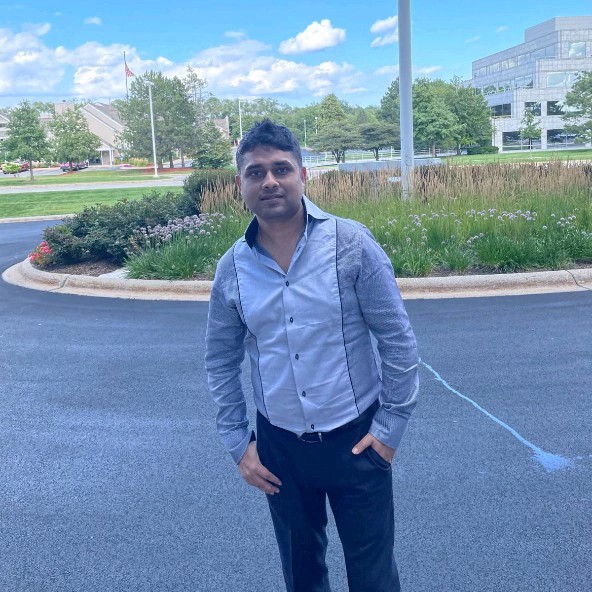
Dr. Ayon Mukherjee is a statistician specializing in statistical innovation for the pharmaceutical industry, with experience spanning both academia and industry. He holds an MSc in Applied Statistics from the University of Oxford and a PhD in Statistics from the University of London.
His work focuses on developing practical, next-generation clinical trial methodologies, with particular expertise in adaptive designs, early-phase dose optimization trials in oncology, and Phase III clinical trial design. His current research advances master protocols and multi-intervention trial designs in oncology, enabling more efficient evaluation of treatments while addressing treatment heterogeneity. He is deeply committed to translating advanced statistical methods into practical solutions that improve drug development.
Throughout his career, Dr. Mukherjee has collaborated with pharmaceutical companies, CROs, and cross-functional teams across multiple therapeutic areas, including oncology, immunology, cardiovascular and metabolic health, neuroscience, and respiratory diseases. His expertise includes classical and Bayesian methods, survival analysis, experimental design, and advanced analytics, supporting clinical trial design, statistical strategy, and innovation initiatives from concept through execution.
Dr. Mukherjee also serves as an academic reviewer for the Journal of Statistics in Biopharmaceutical Research, Pharmaceutical Statistics, and Statistical Methods in Medical Research. His technical expertise includes SAS, R, STATA, SPSS, Python, MATLAB, LaTeX, Minitab, Design-Expert, Teradata, and other statistical software. He is passionate about advancing innovative, data-driven approaches that accelerate evidence generation and improve patient outcomes.
Transcript
00:00
You are listening to the Effective Statistician Podcast. The weekly podcast with Alexander Schacht and Benjamin Piske designed to help you reach your potential, great science and serve patients while having a great work-life balance.
00:22
In addition to our premium courses on the Effective Statistician Academy, we also have lots of free resources for you across all kind of different topics within that Academy. Head over to theeffectivestatistician.com and find the Academy and much more for you to become an effective statistician.
00:49
I’m producing this podcast in association with PSI, a community dedicated to leading and promoting the use of statistics within the healthcare industry for the benefit of patients. Join PSI today to further develop your statistical capabilities with access to the ever-growing video-on-demand content library, free registration to all PSI webinars, and much, more.
01:14
over to the PSI website at www.psiweb.org to learn more about PSI activities and become a PSI member today.
01:31
Welcome to another episode of the Effective Statistician. And today I’m moving a little bit outside of my comfort zone because I have never actually worked in that area, but I hope then I can actually ask much better question. So, Ayon, maybe you can start by introducing yourself and then we can dive a little bit into the topic. Yeah, thanks, Alexander. And before starting, I would say that thanks for having me.
01:59
I have been following your podcast many episodes of this. It’s a pleasure to be over here speaking to you in this podcast. So I am Ayon Mukherjee. I have been in the clinical domain for past several years. My initial focus was on adaptive designs, especially adaptive radicalization method. And then my focus has moved to more on the early phase dose escalation and dose optimization trials. I’m at the moment with Eli Lilly.
02:28
working as a TA lead for oncology and CMH, as well as I’m contributing to statistical innovation in terms of designing these clinical trials, especially the early phase oncology trials. Awesome. So we have talked about dose finding and adaptive designs and things like this in a couple of episodes. Should probably be more because that’s not my speech, but today we want to talk about something that has also lot of meaning from a regulatory.
02:58
perspective and that is Project Optimus. Maybe you can introduce us a little bit to what that is and where that was coming from. Right. First of all, thanks for asking this question. It’s a very important topic and it’s been discussed worldwide in various different ways. So I will try to briefly summarize of what the overall background is and what the current trend is in terms of thought process on this topic.
03:28
So traditionally when cancers were treated with chemotherapies, the way the chemotherapy works is that it directly goes and burns the tumor cells. And that’s why as the doses were increased, the toxicity used to increase due to the medication as well as the efficacy used to increase because more tumor cells were getting burnt. And therefore mathematically the
03:57
assumption of efficacy and toxicity increasing monotonically with increase in dose was valid for traditional chemotherapy medication. And we used to use various designs like 3 plus 3 designs and then it went on to Bayesian logistic regression model point designs. And there were a lot of such designs which was catered for these types of medications, which was chemotherapy. But oncology drug development moved from
04:26
chemotherapy to immunotherapy and targeted therapies. Those types of medication works very differently to how chemotherapy works. So the way it works is that when uh a patient takes in the drug, it goes and binds to an immune cell. The drug compound goes and binds to an immune cell and that target where it binds to releases immune response and the immune response goes and kills the cancer cells.
04:54
And after a certain point of time, what happens is that with an increase in dose, that target binding might get saturated or after that point of time, the efficacy of the drug may plateau out or fall off, which is quite different to how chemotherapy used to work. So now this assumption of efficacy being as good as toxicity with an increasing dose remains invalid.
05:21
FDA came out with this concept of how to design clinical trials when we are moving away from chemotherapy to targeted therapies and immunotherapies. And that gave rise to Project Optimus, the initiative by Oncology Center of Excellence. And they formed this initiative with the goal to educate and collaborate with academia, industry, and regulatory bodies together to have a unified approach towards designing
05:50
trials with these compounds. And what they said is that we need to integrate more data than only the dose limiting toxicity data, which was main focus for the chemotherapies. They used to increase the dose levels with the observation of the number of dose limiting toxicities which were happening. And over here, FDA said that, okay, dose limiting toxicity is fine, but we need more data to find an optimum dose combining all these data sets.
06:20
and combining all these metrics like efficacy, exposure response models, toxicity of course, as well as not those high grade toxicities, but also consider the lower grade toxicities as well, because these drugs are taken for a wider period of time as compared to the chemical therapies. So even if there are grade one or grade two toxicities, which are quite a lot, but that might not be higher grade toxicities, patients may drop off.
06:48
due to tolerability issues. And that may create problem if a intolerable drug is taken for phase three trial, because there would be a lot of censoring phase three when we’re analyzing PFS or OS. For the chemotherapy, we take that more in these cycles and then you have pauses in between. Yes. The immunotherapy, you would take it more continuously and therefore smaller toxicity grades might actually pile up over time.
07:18
And I think probably the earlier studies are not that long-term, like the phase three studies becomes much harder to predict what will happen with the phase three studies. Absolutely. This gave rise to this project Optimus and we are trying to find a dose which goes into phase two or later stage development, which is not only well tolerable or not only safe, but also
07:44
has a good efficacy signal as well as tolerable, has got a well-balanced PKPD response, exposure response outcome. So those are the metrics which we want to optimize to select the dose to go for. Okay. So what are ASLAP data points that we can use to better understand, especially the dose-efficacy relationship? MDA has clearly the guidance set up for different criteria.
08:14
to design these clinical trials. And the first and foremost is that we need to have a clear PKA sampling and analysis plan for these types of trials. And there are a lot of population PKA models which are being developed by the pharmacologists within each organization. And what we need to do is that we need to understand what the exposure response is through those stake or sending mechanistic model.
08:41
and incorporate those in our design to select the dose to go forward. So PK and PD are important. Probably PD might take a bit longer than PK to observe, but depending on those operational challenges. But in terms of the data, we look at PK PD information. We look at the lower grade toxicities. We look at some of the tolerability outcomes if available. We also try to look
09:10
Once we select a dose for one indication, we also try to see if we can enhance that dose for multiple indications as well. So these are the four steps which FDA has mentioned in their guidelines for us to design such trials. But even in, but still in phase two studies, it will be difficult to measure things like progression free survival or some efficacy endpoints. Yeah. In phase two, we look at mainly ORR or progression free survival at
09:40
six months, EFS6, which is a binomial endpoint. So yeah, it’s difficult to measure those long-term endpoints for a phase two setting. Where do we stand with Project Optimus? Can you give some key recommendations from it? At the moment, since its inception in 2021, till now in 2025 end, we have come some way in Project Optimus. Now people around the globe
10:08
are speaking about how to design such trials to find the optimal biological dose. So we have made some progress. However, we still need to evolve because what I see is that there is a lack of consensus of how things are being designed. One, and also there is a variability of awareness between continents. I see that it is quite actively spoken about in the US side.
10:38
a bit less in the European side, but very less in the Asian and especially Indian side. The awareness factor is something which we need to really work on and collaborate across continents to raise the bar of awareness of how such designs, how such clinical trials are designed. Also, we need to do some cross-functional collaboration where we can go and make the clinicians understand.
11:06
that what’s the importance of these things. Yeah, I completely see. If you don’t know about it, you will not ask for it. So communicating about what is Project Optimus, what is this about, how it will help you as an individual team member, but also how it will help your study team is very, important. I see the same thing, even for estimates, estimates when it came out in ICG9R1, it was not only meant for only biostatisticians.
11:36
was for a proper collaboration between the clinical team and the statistical team. However, since 2019 till now, it has been most spoken about by biostatisticians and clinicians have been like trying to understand what the importance of that is. I don’t want this to be the same for Project Optimus as well. So I think communicating that with the clinician, the importance of it is a very key point.
12:03
Yeah, with the estimates, someone told me that an addendum to E9 is potentially one of the burst defects of giving it so much statistical background when de facto it is not just a statistical topic. And also it’s very common kind of talked about that source or missing data problem is also not super helpful. So there’s a couple of things around it. What I think from a communication point of view is
12:32
always really important is to show people why it matters to them and how they can benefit from it and how they can easily get into it. So offer direct, helpful steps. These three things are absolutely key and that depends on the audience. So if you talk to statisticians, it will be very different than if you talk to pharmacologists or if you talk to physicians.
13:00
or to people coming out of the regulatory function. I completely agree. And I think this communication part is very key that amongst the statistician, when we discuss about various designs, there is one way which we communicate because of the background of all these designs, which we know about those who are working in this area. But when we go to the clinician, we need to step into their mind and we need to communicate based on
13:29
how they are used to thinking it. And that’s a very key thing, which every of the statisticians who have been designing this clinical trial is supposed to do. And that is something which I think needs to come up a bit irrespective of wherever or whichever continent it is being worked on. One of the key challenges of any innovation is usually what is the regulatory acceptance of these new things. Yeah. So here you have a
13:58
big advantage given that there’s a lot of documentation, a lot of resources around the FDA and that project. So you can say, yes, that is not just backed up, that is even recommended, expected. And usually that is a huge argument for making things happen. Yeah, I completely agree. That makes a lot of life easier because we already know that FDA wants these types of designs in practice.
14:28
However, what I see is that there has been a lot of these work which has been happening in terms of publication from academia. However, we see that a lot less of those designs are being actually used in practice. And that’s where the need of a proper industry-academia collaboration needs to come in place. That, okay, FDA is quite open to such designs to be implemented in practice.
14:56
But which of those designs, which are being published, is actually implementable? And I see a very few subset of such designs are being considered from an application perspective. So I think a proper industry-academia collaboration needs to come in place of what are the challenges in industry and how the academic people who are publishing these methods can cater for those. So that is a very important thing which needs to be evolved. Completely agree.
15:27
working with academia, in a sense, any kind of outside expert. Well, you’re working at Lilly, I guess you have a lot of internal experts, but potentially lots of my listeners work maybe at smaller organizations. And then they find someone that is either from the academic side or a freelancer or zero where you can learn from. I think the other part is potentially any cross-farmers collaborations.
15:56
Yeah. I’m pretty sure there are certain interest groups, working groups where you connect with like-minded statisticians and learn a lot from that. Yeah, I completely agree. Like in the U S there is a working group called the Innovative Design Scientific Working Group, IADSWG, and it’s a part of DASHU. And they have a subgroup specifically dedicated for early phase oncology, drug development, and designing such trials.
16:25
We are a part of that group and we constantly work together on how to better these designs in practice. So I think, yes, I completely agree such cross-industry working group is very much needed. Let’s talk a little bit about more what statisticians can do. So before we turned on the microphone, you just mentioned that you’re traveling at the moment quite a lot to training in various continents of the world.
16:53
Can you tell a little bit about the role of training and how it helps with making sure people understand more about Project Optimus? I think that’s a very key part. Any researcher who is working on these methods or developing methods, developing the methods is one part, but no methods are useful unless those are used in practice. So the other part, other important part of it is
17:23
communicating about these methods and raising the awareness of these methods at various different places. And I think that’s a key part. What the industrial people really wants are some examples of how these trials are being run at the moment. And what are the key challenges that are being faced with the present methodology, which are already in place. Because some of the clinicians say that, with the present work,
17:50
we are getting the approval. So why do we need to bother about the thing? So my answer to them is that, okay, getting the approval is a very key point for industry, but treating the right patients with the right dose is a far more important point for any of the pharmaceutical industry. So if we are missing out on a better dose by using a non-optimal methodology to design a trial, then we are not serving
18:18
our purpose of being in a pharmaceutical industry. So that is a key point which we are trying to, because nowadays most of the pharma industries are quite driven by the approvals, which is very much important for the business, but also getting the right dose to the right patients in the society is far more important. Yes. And also later on, so imagine your dose is too high or too low. Yeah. And
18:46
I’m pretty sure there’s a competitor somewhere that will have a little bit of a closer look and might be able to get much closer to the sweet spot. Yes. And that competitor will have a great advantage later on in the market. Yeah. And to correct that later on is really, really difficult. Oh, yeah, that is very difficult. And Amgen, the…
19:13
Lumicross trial, which are conducted in Amgen, that’s a very good example of how things were done after post-marketing research of how doses were modified because it didn’t implement a proper dose optimization regime. So that’s available for free, all the information. So that’s a very good example of what you just now see. Yeah. And then reputation, trust, all these kinds of different things have already gone out of the window.
19:42
And it’s really, really hard to reestablish that. Now, having someone that trains and having someone that has experience and examples are super helpful. What tools or documents that are available that make it easier for teams to introduce these kernel designs? I think that’s an excellent question because
20:06
There are lots of methodologies which are coming in place, but there aren’t many tools in place to implement these. So I think once someone develops a proper dose optimization methodology, a tool needs to be accompanied in their publication or in their work. So Andy Anderson is doing quite a lot of work on in the R Shiny app tools in their trialdesign.org website, which is freely available for anyone.
20:33
And that does all the simulations for the design methods which have been developed by MD Anderson. I am working very closely with Professor Ying Wang in one of the special issue in pharmaceutical statistics, which we are running on Project Optimus. And I have been saying that what they have been doing is excellent. And that is what is needed that these are packages and are tools to simulate these designs.
21:00
in practice because these are complex designs, these adaptive methods. Once every cohort of patients comes in, the design gets adapted based on whatever the background model is complicated and how it performs in various different hypothetical scenario needs to be assessed prior to we start the clinical trial. And such kind of R packages and tools needs to be made available for any industry, whether they are working on internally for their own benefit or like MD Anderson.
21:29
is available for public, these needs to be made available for these designs to get actually implemented in practice. Otherwise, wouldn’t know that how these designs are working in practice. Yeah, not only clinicians, also statisticians. If I’m a statistician and I’m not super comfortable with that and I need to create my own R code for it, I probably will not do it. Yeah, I would not trust that I’m doing everything the right way.
21:56
And it will be much harder to convince others that my tool is right. There’s a lot of limitations around these things. So for any researcher that is just listening, please make sure that you have good document code available that helps the community to pick it up, to further work on it, and also make yourself available so that you can train others for it. And by the way, companies are happy to
22:25
researchers for such training. Yeah. And also decent amount of money because it can help so much. So don’t think you need to give that away for free. Things are toolless, usually the code is for free, but the training around it, that is definitely something that you can be reimbursed for. absolutely. like many people are quite comfortable using R codes or do their own R programming.
22:55
And some people are not that prone to R and they prefer the point and click version. So the R-Shite app version is better for them. But for those who prefer R codes, think there needs to be well-documented dashboards like auto-dwad dashboards, which gives proper R codes for every different methods that are being brought up in place. We talked now about a couple of different preferences. We will add that to the shell notes.
23:23
We make it also easy for you to find all these kinds of different resources and tools that we talked about. So I’m quite excited about this project Optimus and also quite excited about the whole kind of new class of immunotherapy and all the benefits that come with it. Cancer remains one of the biggest enemies and the better we can find it, the better for all of us.
23:50
As you have just explained, statisticians can play a huge role in that area and help patients not suffer too much side effects, but also get enough efficacy and really meets this speed spot of a good benefit risk ratio. Absolutely. And for that, the two key factors are collaborating cross-functionally, communicating well with people outside the statistical domain about these methods.
24:20
And also the other key factor is having a good industry academia collaboration where these methods are practically addressed while they’re being developed. Thanks so much. Thanks, Alexandra.
24:36
This show was created in association with PSI. Thanks to Rain and 13FEVS, who helped with the show in the background, and thank you for listening. Reach your potential, leak great science, and serve patients. Just be an effective statistician.
Join The Effective Statistician LinkedIn group
This group was set up to help each other to become more effective statisticians. We’ll run challenges in this group, e.g. around writing abstracts for conferences or other projects. I’ll also post into this group further content.
I want to help the community of statisticians, data scientists, programmers and other quantitative scientists to be more influential, innovative, and effective. I believe that as a community we can help our research, our regulatory and payer systems, and ultimately physicians and patients take better decisions based on better evidence.
I work to achieve a future in which everyone can access the right evidence in the right format at the right time to make sound decisions.
When my kids are sick, I want to have good evidence to discuss with the physician about the different therapy choices.
When my mother is sick, I want her to understand the evidence and being able to understand it.
When I get sick, I want to find evidence that I can trust and that helps me to have meaningful discussions with my healthcare professionals.
I want to live in a world, where the media reports correctly about medical evidence and in which society distinguishes between fake evidence and real evidence.
Let’s work together to achieve this.

